
Dermal Filler for Nasolabial Folds to Treat Smile Lines (Laugh Lines)
Most people call them “smile lines.” Some say “laugh lines.” Clinicians tend to call them nasolabial folds, which sounds a bit more serious than it needs to.
But whatever name you use, those deeper creases that run from your nose toward the corners of your mouth? They tend to show up before people feel ready for them, and they’re one of the most common concerns we treat here at YourSkinRN in Waterloo, Ontario.
This guide breaks down exactly how dermal fillers soften nasolabial folds, what actually makes results look natural, how long they last, and why certain fillers (Restylane, Teosyal, Revanesse, Teoxane) tend to perform especially well for this area.
If you’ve been searching for nasolabial fold filler in Kitchener, or wondering whether filler is the right fix for your smile lines, this article will walk you through everything step by step, without the fluff.

What Exactly Are Nasolabial Folds (and Why Do They Deepen)?
Nasolabial folds are natural. Everyone has them, even kids. The issue isn’t the fold itself, it’s when the fold becomes deeper, sharper, or more shadowed than it used to be.
A few things happen over the years:
The midface loses volume (cheek fat pads shift downward).
Skin gets thinner and doesn’t bounce back the same way.
The “support” under the fold reduces, which makes the crease look harsher.
And sometimes, genetics just decides things for you.
In Waterloo, we see a lot of cases tied to natural volume loss, sun exposure, and just life. Nothing you did wrong. These lines simply settle in and start to look more permanent, even when you’re not smiling.
That’s where filler comes in, but not in the way many assume.
Do You Put Filler Directly Into the Fold? Sometimes… but not always
A lot of people picture the injector placing filler right into the crease itself. And we can do that when needed, especially for lighter or medium-depth folds.
But here’s a small insider detail: the best results usually come from treating the midface first, because the fold is often a symptom of volume loss higher up.
Think of it like propping up a collapsing tent. If you lift the pole underneath, the sides pull up too.
So, in a typical smile line treatment at YourSkinRN:
We assess the midface and cheek support.
We determine whether lifting above the fold will reduce the shadowing.
Only then do we add filler directly in the fold if it’s still needed.
And we use fillers that behave well in motion because this is a high-movement area.
That combination is what makes results look natural instead of “puffy.”

Which Fillers Work Best for Nasolabial Folds? (And Why These Brands)
YourSkinRN uses hyaluronic acid (HA) fillers, which blend naturally into the skin and can be reversed if needed. That’s a major safety advantage.
The brands we work with, Teoxane, Restylane, Teosyal, and Revanesse, each have slightly different textures, cohesivities, and lifting abilities. That means we can match the filler to your specific folds.
Here’s a quick sense of how they compare:
Teosyal (by Teoxane)
A popular option in Waterloo for smoothing deeper folds. It blends beautifully and holds shape well without looking stiff.
Restylane
Known for its “gel strength.” Great when the fold needs structure or definition softened without adding bulk.
Revanesse
Canadian-made and very smooth. Often used when someone wants a softer, more flexible result around the mouth.
Teoxane
These products are engineered to be resilient in high-movement areas. They work particularly well for smile lines that deepen when you laugh or talk a lot.
We choose the filler based on the behaviour of your fold, not a one-size-fits-all approach. That’s part of the reason results look more natural, especially in motion.
What the Treatment Is Actually Like (Step-by-Step)
People imagine filler as this intense, complicated thing. It’s usually not like that. Here’s how it typically goes at YourSkinRN:
Consultation & facial assessment
We look at your midface, the fold depth, your profile, and how everything moves when you smile. Every face has a different “pattern” of volume loss.Photography (before/after documentation)
Helps you see the difference clearly.Numbing
Topical numbing cream, plus the fillers themselves contain lidocaine so most people are surprised by how tolerable it is.Injection technique
Sometimes it’s done with a fine needle; sometimes with a cannula for smoother, safer placement. This depends on your anatomy.Shaping & balancing
Small adjustments. Minor tweaks. It’s a bit of artistry and a bit of science.Aftercare instructions
Avoid heavy exercise for a day, keep the area clean, and skip anything that increases facial heat (saunas, hot yoga) for 24–48 hours.
Most people walk out looking subtly refreshed, not “done.”
How Long Do Nasolabial Fold Fillers Last?
In Kitchener-Waterloo, we usually see:
6–12 months for softer fillers
12–18 months for slightly firmer options
Sometimes longer if the person has slower metabolism or comes in for regular maintenance
Some fillers break down more quickly in areas of high movement, and smile lines move a lot. The good news is that the subtle improvements tend to last beyond the filler itself because you’re supporting the structure under the skin.
Will It Look Natural? (The question everyone asks first)
Natural is the default when the injector understands the anatomy behind the fold, not just the crease itself.
Natural results focus on:
Lifting, not over-filling
Keeping the transition between cheek and mouth soft
Using the right filler density
Respecting your facial proportions
Avoiding bulkiness in the lower face
When done properly, people see a refreshed version of you, not a different face.
A lot of Waterloo patients tell us, “I just want to look like I got more rest.” And honestly, filler does that well when it’s placed thoughtfully.
How Much Does Nasolabial Fold Filler Cost in Waterloo?
Pricing depends on how much volume loss there is and whether we’re treating just the fold or the midface as well.
But in general, you can expect:
$350 for half a syringe and $600 for 1cc syringe in Waterloo
Most patients use 1–2 syringes for natural results
Maintenance is once every 9–18 months depending on the filler and anatomy
We always recommend an in-person facial assessment so you know exactly what your face needs.
What About Risks? Let’s Be Honest About Them.
Filler is extremely safe when done properly, but no cosmetic procedure is 100% risk-free.
Possible side effects:
Redness
Swelling (especially the first 24–48 hours)
Small bruises
Tenderness
Temporary unevenness as swelling settles
Rare but important:
Vascular occlusion (why you always want a trained medical injector who can recognize and treat complications immediately)
YourSkinRN keeps hyaluronidase on hand, which allows immediate reversal of HA fillers if needed. That’s one of the many reasons HA fillers (like Restylane, Teosyal, and Revanesse) are trusted for nasolabial folds.
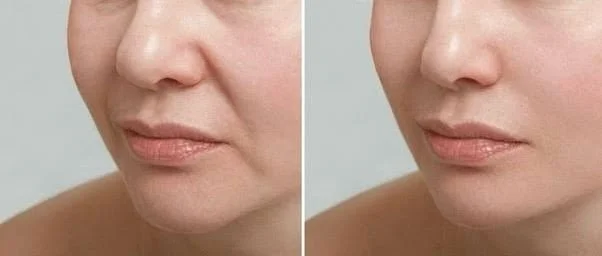
Before & After: What Results Usually Look Like
(Insert clinic photos here, even two or three conversions boost trust massively.)
Most people see:
Softer folds
Improved cheek support
Less shadowing
A more refreshed, “lifted” look
Natural movement when smiling
It’s not about erasing your expressions — it’s about smoothing the heaviness they create.
Filler vs. Other Options: Is Filler Really the Best Fix?
In many cases, yes. But there are exceptions.
Filler works best when:
The fold deepened due to volume loss
The cheeks have flattened
The area looks shadowed
You want fast, reversible improvement
You might need alternative treatments if:
Skin laxity is very high
You have significant midface deflation that filler alone can’t lift
You prefer collagen stimulation over volume (Sculptra, etc.)
You want long-term tightening (RF microneedling, lasers)
That’s why consultation matters. There isn’t a universal fix, only the best fix for your anatomy.
FAQs
Does nasolabial filler hurt?
Mostly mild discomfort. Numbing + lidocaine in the filler makes it very manageable.
How soon will I see results?
Immediately. Swelling settles within a few days.
Can filler make smile lines worse later?
No. As it fades, your face gradually returns to baseline.
Can I combine nasolabial filler with lip filler?
Yes, and sometimes it helps balance the lower face beautifully.
Is there downtime?
Minimal. Most people return to normal activities the same day.
Thinking About Treating Your Smile Lines?
If you’ve been typing “nasolabial fold filler Waterloo” into Google or scrolling through before/afters trying to make sense of it all, a consultation is the easiest place to start.
At YourSkinRN in Waterloo, Ontario, we take a very individualized approach, matching the filler type (Restylane, Teosyal, Teoxane, Revanesse) to your specific anatomy, and focusing on results that feel like you, just smoother and fresher.
Book a Free Consultation
Talk to one of our experienced injectors for a free consultation at YourSkinRN in Waterloo to see what your face actually needs and get a customized plan.